SERP Flux Checker
SERPmetrics flux reports show search engine volatility over the last day & month. High flux means a high level of change in the SERPs. The SERP Flux Checker lets you quickly see how stable or volatile the search engine results pages (SERPs) are fo...
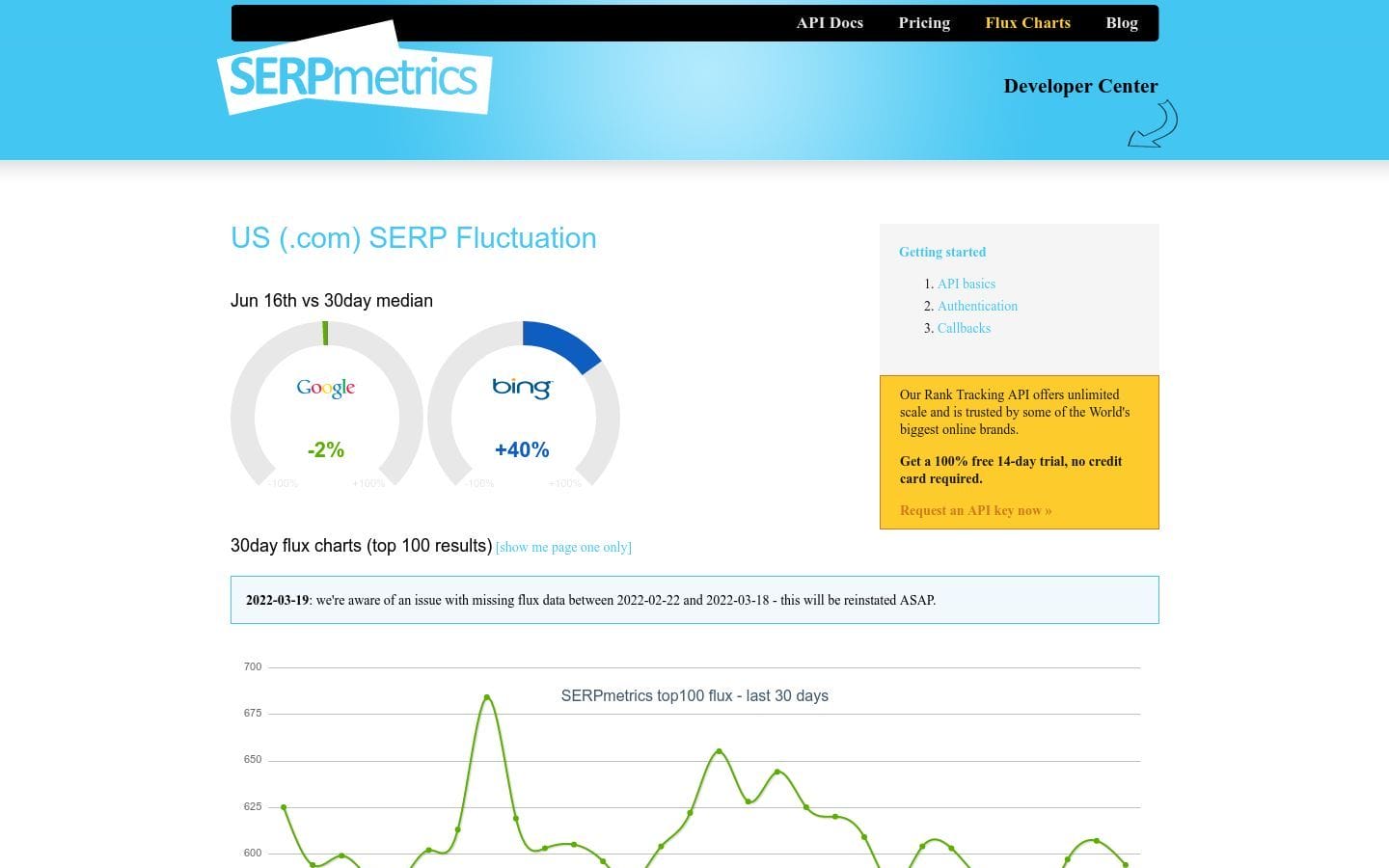
SERP Flux Checker
SERPmetrics flux reports show search engine volatility over the last day & month. High flux means a high level of change in the SERPs.
The SERP Flux Checker lets you quickly see how stable or volatile the search engine results pages (SERPs) are for any keyword or phrase.
The SERPmetrics Flux Index is a measure of how much the SERPs for a given keyword or phrase have changed over the last day.
A high flux index means that the SERPs are unstable and are changing a lot.
A low flux index means that the SERPs are stable and aren't changing very much.
You can use the SERP Flux Checker to: See how stable the SERPs are for a given keyword or phrase Find out when the SERPs are most volatile See how the volatility of the SERPs has changed over time The SERP Flux Checker is based on the SERPmetrics Flux Index, which is a measure of how much the SERPs for a given keyword or phrase have changed over the last day.
The SERPmetrics Flux Index is updated every hour, so you can see how the SERPs are changing in real time.
You can also see how the volatility of the SERPs has changed over time by looking at the SERPmetrics Flux History chart.
The SERPmetrics Flux History chart lets you see how the SERP Flux Index has changed over the last day, week, month, or year.
You can use the SERP Flux Checker to see how stable the SERPs are for a given keyword or phrase.
If the SERP Flux Index is high, it means that the SERPs are unstable and are changing a lot.
If the SERP Flux Index is low, it means that the SERPs are stable and aren't changing very much.
You can also use the SERP Flux Checker to find out when the SERPs are most volatile.
The SERP Flux Index is updated every hour, so you can see how the SERPs are changing in real time.
You can also see how the volatility of the SERPs has changed over time by looking at the SERPmetrics Flux History chart.
The SERPmetrics Flux History chart lets you see how the SERP Flux Index has changed over the last day, week, month, or year.
You can use the SERP Flux Checker to see how the volatility of the SERPs has changed over time.
The SERPmetrics Flux Index is updated every hour, so you can see how the SERPs are changing in real time.
You can also see how the volatility of the SERPs has changed over time by looking at the SERPmetrics Flux History chart.
The SERPmetrics Flux History chart lets you see how the SERP Flux Index has changed over the last day, week, month, or year.
About Us

Aslam.ai
Aslam.ai is the world's best curated list of the tools on the internet. Whether you're looking for a new AI tool, reviews, news, We're here.
-

-

-

-
 2 years ago

Latest Comments 0 Responses